|
$$PLAIN_TEXT_PREVIEW$$
|
Recently it has become more difficult to separate Earth Day events from the awareness of climate justice. Traditional Earth Day celebrations and “environmentalism” in general call upon images of vast spaces of protected pristine lands and water, forests, and wildlife species that evoke the feeling of special places. When we think about #Earth Day, are we also thinking about the far-reaching social and environmental justice implications of climate change disasters? Are we thinking about climate justice? Climate crisis reveals the terrifying reality of marginalized, bipoc and legacy impacted communities usually being the first and the worst impacted by climate change and far less likely to survive and thrive. Those who survive climate disasters may become climate refugees migrating to other areas less vulnerable to recurring climate disasters if they have the resources to relocate like in the case of some of our Duwamish Valley neighbors. Lower economic and underserved communities face a disproportionate hardship from disasters. Disasters bring trauma to communities given the costs of disasters can be wide-ranging, including not just property damage, but broader negative impacts on economic, social and physical well-being. Disasters can act as tipping points for families and individuals on the edge, pushing the marginally homeless into homelessness, those living paycheck-to-paycheck into debt and financial insecurity, and consuming any small savings that had been accumulated for housing, education or other purposes. In short, climate disasters are the death nail to communities trying to rise above poverty. We have to shift our focus from only the places, pristine or in need of restoration, and look to the profound intersection of people and the environment. Look beyond merely wanting natural places for people to enjoy and into the integral reliance of human health on nature in the midst of a changing planet. If movements are described by the advocates that articulate it and the social power they possess, then it is time to be more direct about the environmental movement’s role in protecting human quality of life and relentlessly pursue equitable resilience to climate change. This is what #Earth Day should reflect in our mind, actions and investments towards protecting those most impacted. DRCC works to address the many practices that are harming our community. We will continue fighting for the policies needed to rectify these impacts and advance a society that fosters sustainable, cooperative, regenerative communities that uphold all rights for all people in harmony with the earth. Are you with us? Paulina Lopez, ED- DRCC
|
Updates Superfund
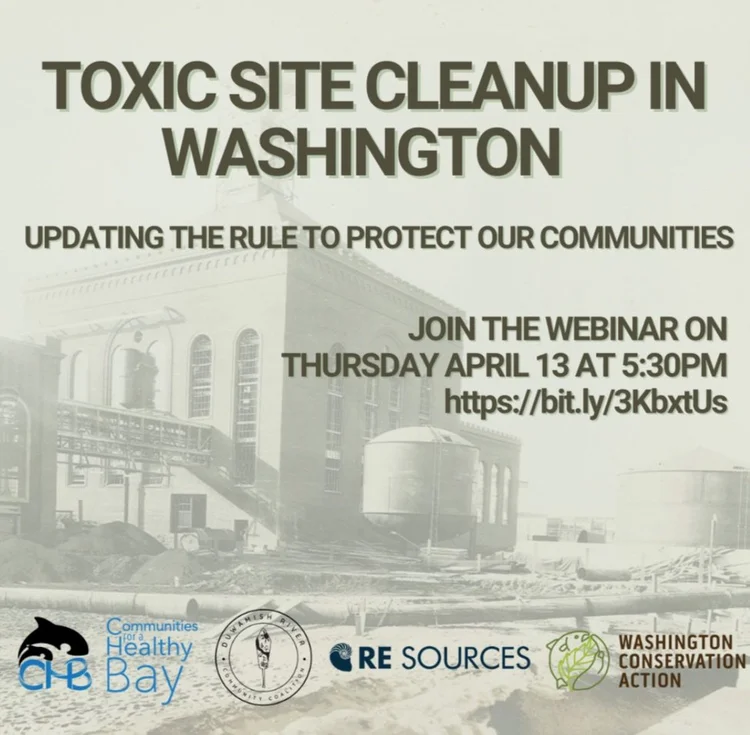
There are over 14,000 toxic waste sites throughout Washington, most of which are still awaiting cleanup. They are not just industrial facilities – they’re in neighborhoods at every corner of the state and disproportionately affect people of color and tribes leading to poorer health outcomes. Despite this, the state’s environmental cleanup law doesn’t prioritize cleanups where they are desperately needed. The data is clear – people of color and low-income communities bear a disproportionate share of health risks from exposure to toxics. This has serious environmental justice ramifications, including increased risk for serious health problems like cancer and neurodevelopmental disorders in children. The environmental cleanup law doesn’t currently factor this into deciding when and how toxic waste sites are cleaned up, but we can change this. We all deserve clean air to breathe, clean water to drink, and spaces to safely recreate. Tribes deserve to catch abundant and healthy salmon as they have since time immemorial. Please join us for a webinar on Thursday, April 13th at 5:30 PM where we’ll discuss an opportunity to change how toxic waste sites are cleaned up, hear stories of how these sites affect tribes and communities, and learn how to make your voice heard through public comment.
|
LEARNING TOGETHER - Do you know the latest information about our River?
|
2. Climate Justice Climate Change and Community Leadership in Climate ActionMamudou Kuyateh April 4. 2023- RVC/ DRCC Fellow
|
|
The greatest threat to life on our planet right now is climate change, which is already taking place. According to United Nations Climate action, Climate change refers to long-term shifts in temperatures and weather patterns. These shifts may be natural, such as through variations in the solar cycle. Fortunately, there are numerous and well-recognized answers to the climate change problem. The global response should be prompt and forceful given the enormous drive by warming, accelerating disasters that the entire planet is currently experiencing.Yet, global governments have made painfully sluggish progress. In a recent study, the Intergovernmental Panel on Climate Change (IPCC) reports that the global response is behind on turning the curve on global emissions, even so, there is still time to do so. You can provide an example solution here using a source. This is why community leadership in climate action is crucial. There is no doubt that community leadership should be placed at the heart of climate actions and without that, our climate strategies and outcome may not reflect the realities of what is happening on the ground.
|
3. DAISY: Duwamish Air Improvement Study for Youth
|
|
UW and Duwamish River Community Coalition take aim at high rates of childhood asthma. UW researchers and Duwamish Valley community advocates have received a five-year grant from the National Institute for Environmental Health Sciences (NIEHS) to help reduce symptoms of asthma in children who live in the Seattle neighborhoods of South Park and Georgetown. Children who live in the Duwamish Valley have the highest rates of asthma hospitalization in Seattle, according to a 2013 community-led study funded by EPA. The study also found that life expectancy in the Duwamish Valley neighborhoods is eight years shorter than the Seattle average and that levels of air pollutants like diesel and particulate matter is much higher than the city average. Air pollution is a leading cause of asthma attacks in both children and adults and can infiltrate homes and classrooms where children spend most of their indoor time. The Duwamish River Community Coalition (DRCC) will collaborate with the local community, a local clinic, Puget Sound Clean Air Agency, Public Health–Seattle & King County, the non-profit Just Health Action, and a research team from the University of Washington School of Public Health led by Dr. Anjum Hajat to tackle the issue of poor air quality and asthma rates in the Duwamish Valley (South Park and Georgetown). Poor air quality in the Duwamish Valley is caused by industrial facilities, railroad lines, highways, and the nearby airports and exposure to it can worsen asthma symptoms. DRCC aims to coordinate environmental health research and take action under community-driven efforts and leadership to address the community's environmental health needs. This research can be used to empower the Duwamish Valley community, decrease health disparities, and achieve health equity at the individual, community, and policy levels. Stay tuned for more information about this collaboration which will be shared via a fact sheet. For more information please contact Lissette@drcc.org
|
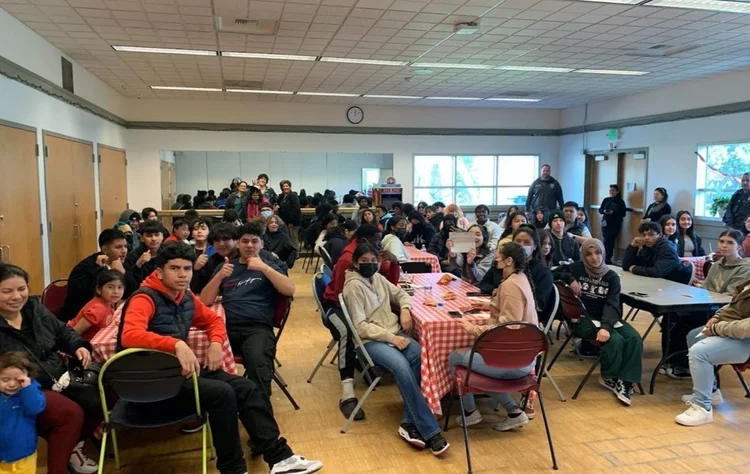
4: DVYC -Duwamish Valley Youth CorpsOn April 1st; after showing up, working hard, and learning all about environmental justice, community advocacy, green jobs and more; our 2023 Winter cohort all graduated! Across 4 different cohorts, 56 youth successfully completed their DVYC winter program, and we couldn’t be more proud. After receiving their checks for participation, several youth came up to share their heartfelt gratitude with Carmen. Some quotes from our youth at the event: “I’m really grateful that I got to do this and I really liked being here.” “I really enjoyed my time at DVYC and I feel like I can help my community now because of this program.” “I know what to do in case there’s a flood.” This season featured two unique cohorts: The Music Program, in partnership with the South Park Community Center, and the IVAN cohort (featured in last month's newsletter). You’ll have an opportunity to meet the IVAN cohort at the next SPNA meeting on Tuesday, April 11th! They will be doing a brief presentation on the IVAN tool, and teaching the community how to use it.The Music Program learned how to create beats, edit videos and combine these two skills to create meaningful content to elevate their voices and community. The rest of our DVYC participants worked with our partners to learn what stormwater is, how to prepare for a flood, why collective care matters when a flooding emergency happens, and how a career in built environments can lead to creating meaningful change to navigate these issues in their communities. These topics and many more were brought to them through their time spent learning from the UW nursing students, UW architects + engineering students, DRCC staff, Seattle Public Utilities, Dirt Corps and the many incredible collaborators that worked with us along the way. We are SO proud of our 2023 Winter cohort and we can’t wait to see what they accomplish! Stay tuned to find out what our Spring cohort will be getting up to next!
|
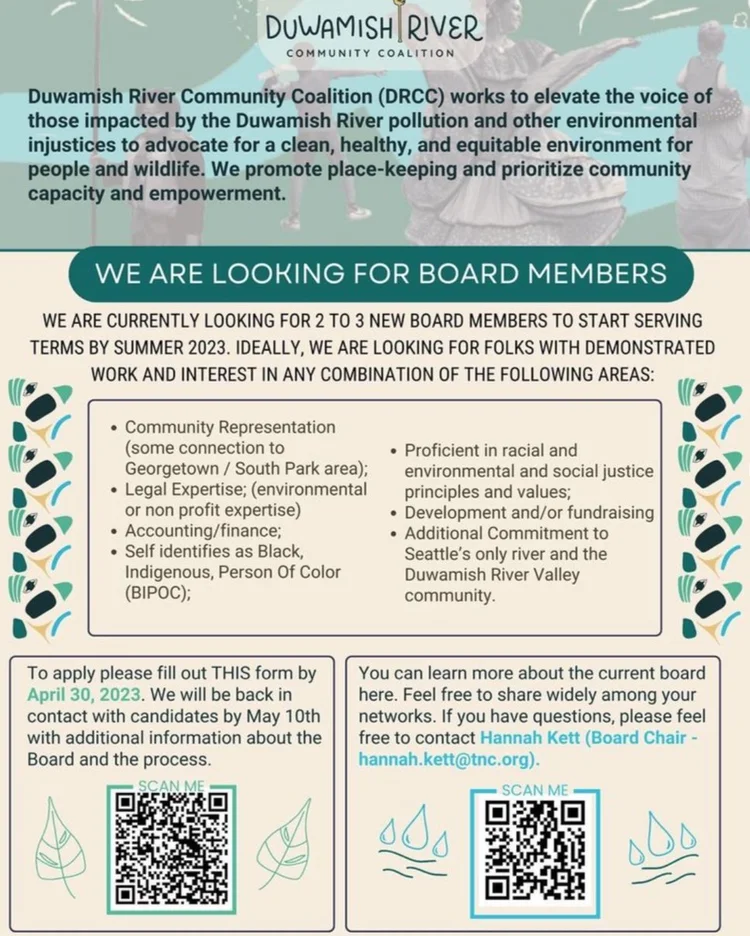
Community Updates DRCC is looking for Board Members
|
|
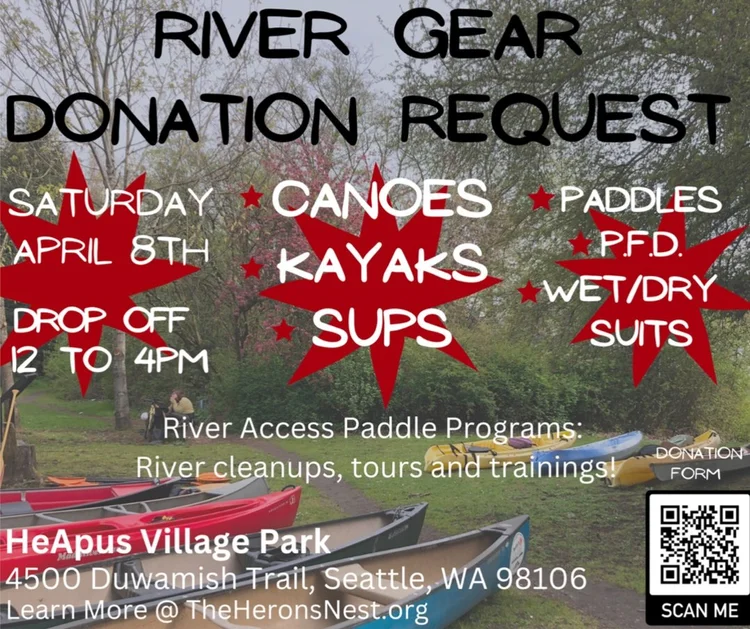
Kayak/Canoe Donation Drop Off & Program open house Come say HI even if you are not able to donate equipment! We are seeking donations of kayaks, canoes, SUPs, paddles, life jackets, wet/dry suits, dry bags, gloves and booties, and boat donations. Cash donations are also welcomed so they can buy new gear! Receipt of donation to a 501c3 (to Shared Spaces Foundation) available upon request.
SATURDAY APRIL 8TH 2023 12-4pm. Herring House/HeApus Village Park/T-107 "Green Boat Shed" 4570 West Marginal Way SW Seattle, WA 98106. Please RSVP using this form: that way we can anticipate donations and assist with boat loading More info: riveraccesspaddle@gmail.com
|
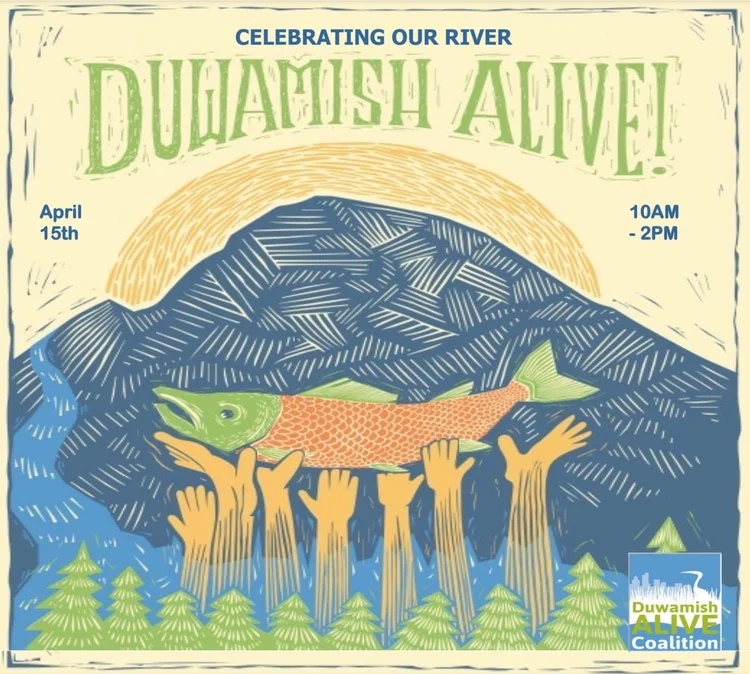
Duwamish Alive - April 15th 10am Join us for Duwamish Alive! for a day of collaborative stewardship effort across our watershed, recognizing that our collective efforts are needed to make lasting, positive improvements in the health and vitality of the Green-Duwamish Watershed. Twice a year these events organize hundreds of volunteers to work at multiple sites in the river’s watershed, connecting the efforts of communities from Auburn to Seattle. Volunteers’ efforts include, a river cleanup by kayak, shoreline salmon habitat restoration, and native forest revitalization.
|
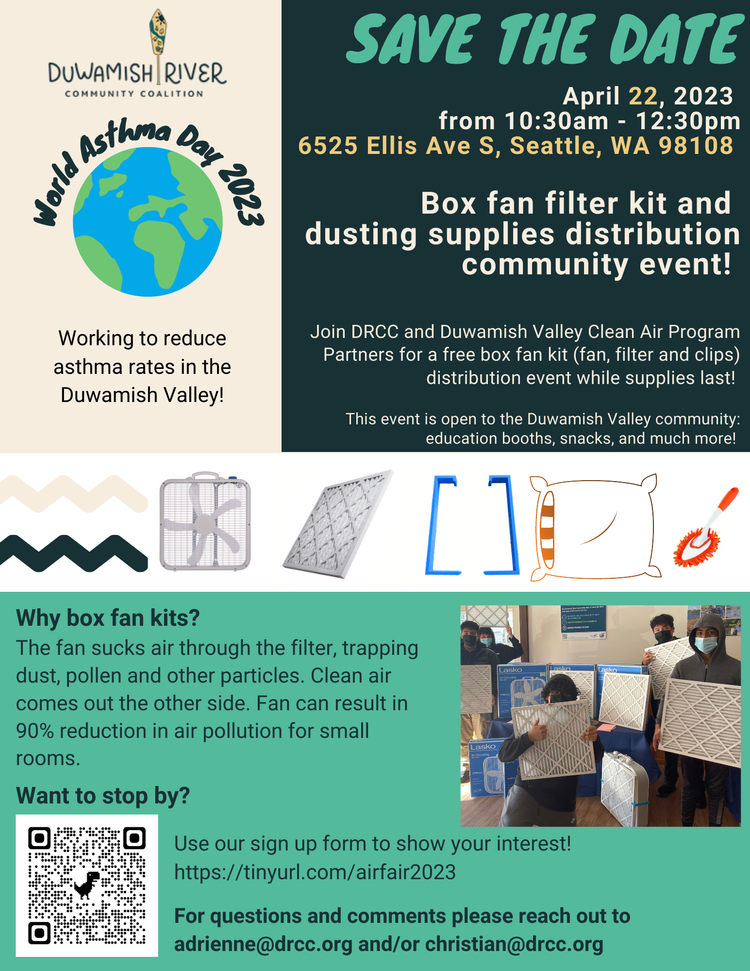
Air Fair - April 22Join DRCC and Duwamish Valley Clean Air Program Partners for a free box fan kit distribution event while supplies last!
|
|
|
|