$$PLAIN_TEXT_PREVIEW$$
Duwamish River Community Coalition

Community Priorities for climate resilience, in partnership with the Climate and Health Adaptation Initiative Grant

DRCC has been collaborating with multiple community-based organizations, institutions of higher learning, and public and private funders to learn together with the community about climate change impacts and mitigation strategies.

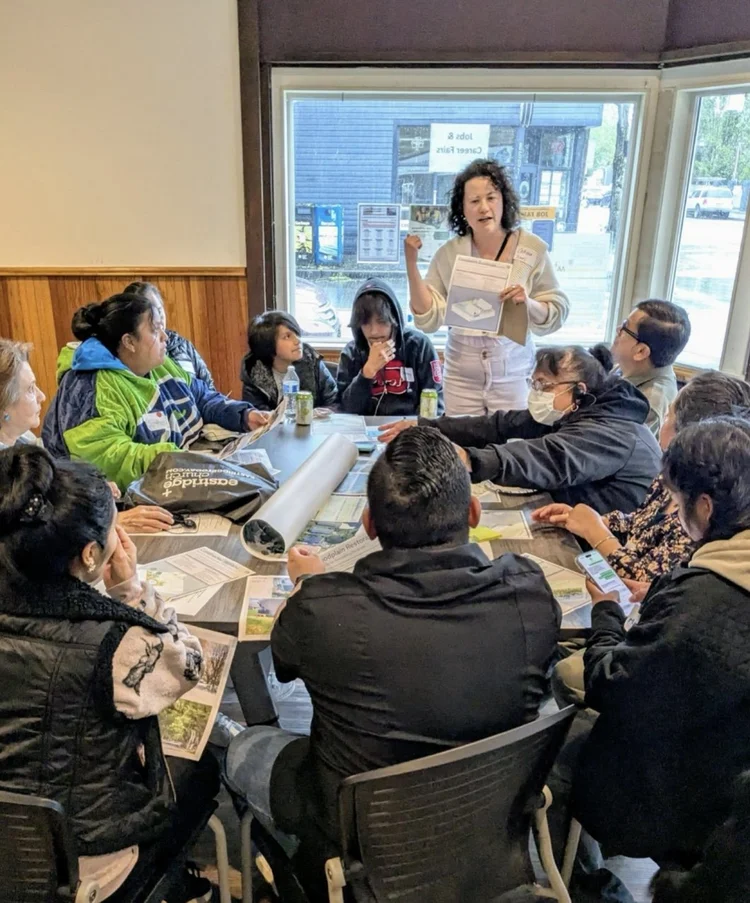
In fall of 2024 we hosted a series of workshops in English, Vietnamese, and Spanish to talk about our climate policy work, to explore ways climate change may impact South Park, and to hear stories of personal experiences. We heard from community that there is apprehension about future climate change impacts, and a sense of helplessness. We heard from community who has already been impacted that they are fearful of more extreme weather events. We believe that these conversations and tools are particularly critical to communities like ours, which is home to many non-native English speakers.

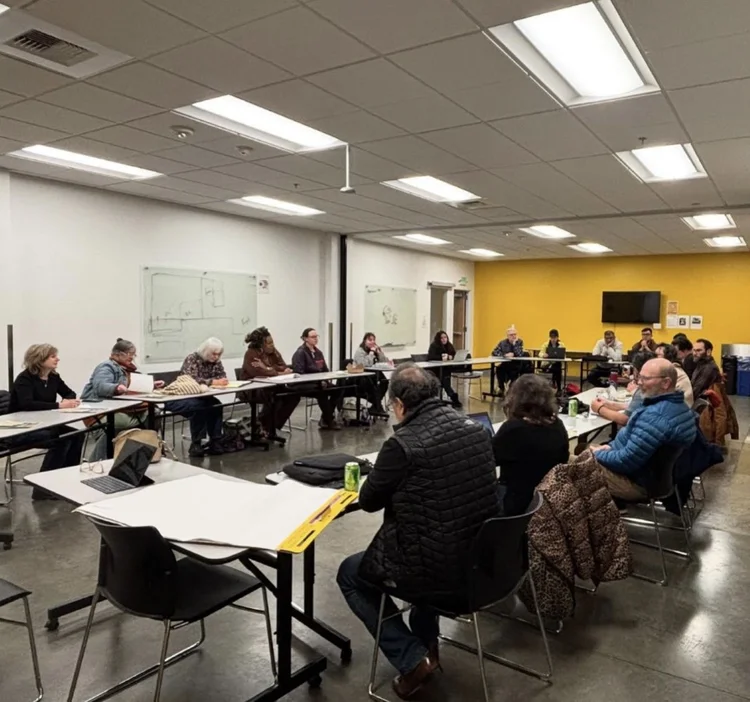
In November we co-hosted a meeting with other community-based organizations. We completed an asset-mapping exercise and discussed priorities, partnerships, and cross-pollination of ideas. We agreed on the following goals: co-creation of community-relevant engagements, enhancing communication, and reducing duplication of outreach efforts, goal-setting, and seeking collaborative funding.


We developed a Climate Cohort of DVYC; this cohort worked on asset-mapping, story-telling and visioning. They partnered with the City of Seattle to present initial plans for the Duwamish Valley Resilience District, and to gather feedback from community regarding potential Resilience District action items.

We also co-hosted a Flood Community Advisory Group in English and Spanish with most-impacted community members to discuss the following: buy-out programs, home elevation, individual assessment plans by flood adaptation contractors, annexation of unincorporated King County, and flood insurance. Neighbors are interested in all of these adaptation efforts.

In Winter of 2025 we collaborated on two meetings: one with community-based organizations and one with the Flood Community Advisory Group. In the first meeting, we engaged in discussion about the Reconnect South Park project and possible outcomes that could impact or mitigate climate change. For example, lower volume of cars and freight will lead to improved air conditions and surplus land could be used as a re-introduced flood plain, to absorb and buffer sea level rise. Some members were quite interested in re-purposing some portion of the acreage currently utilized by Highway 99 as a flooding buffer; others less so. The second meeting was with Seattle Public Utilities. Together, we reviewed their updated Emergency Response Plan and went more in-depth into long-term flood mitigation plans. Impacted community members have reported feeling a much more cohesive sense of community with neighbors, and a deeper understanding of SPU’s work. Although this is not a tangible strategy, it is clear that stronger relationships are critical to climate change resilience.

In Spring 2025, we focused exclusively on impacts from sea-level rise. We surveyed 23 community members, we co-facilitated a focus group in which we prioritized most at-risk South Park sites and learned about nature-based solutions (NBS), and finally we convened a workshop in which community members self-selected by site and considered how these sites could be protected by NBS. Community learned a lot and felt inspired and empowered by the hands-on activities of “building” protective NBS. Participants learned about 9 different types of NBS and were able to select which NBS, either alone or in combination, seemed most suitable for specific sites.

We are finishing out the work on this project by sharing our findings about community concerns, priorities, and lessons learned on social media, podcasts, listservs and via in-person tabling.

What we heard many times included ideas such as these:

  • Why did the City allow houses to be built in a flood zone?

  • How can we protect our homes against the three different types of flooding in South Park, and is there a single solution?

  • We want to learn more about elevation and buy-out

  • We want to learn more about flood insurance

  • Who or what was responsible for the River overtopping in December 2024?

  • How can renters be protected after flood events?

  • What is the industry's role in flood protection or mitigation?

  • What are nature-based solutions?

  • We are concerned with clean air and mental health just as much as flooding

  • We prioritize protection of homes and properties

  • We prioritize green, open space as a flooding mitigation measure

  • We want to see Nature Based solutions

This month we launched our first Policy Advocacy Team Meeting!

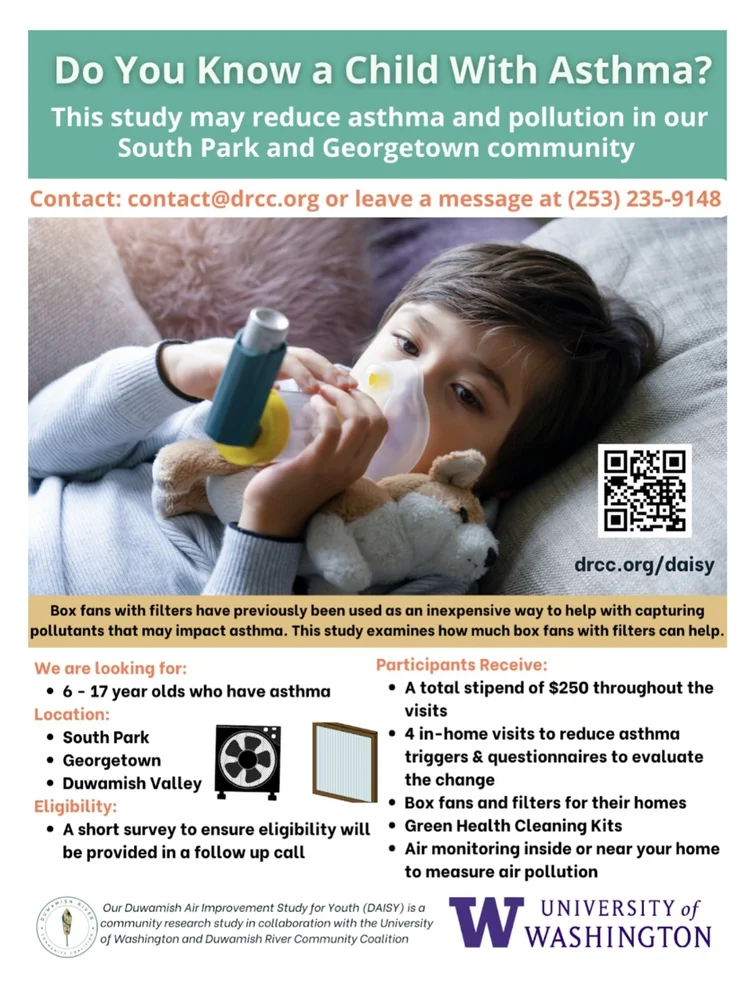
DRCC’s Community Advocacy Team (CAT) and Policy Advocacy Team (PAT) are made-up of local neighbors, and they advise the Clean Air Program and DAISY Study, making critical decisions about our work. The CAT team began as a result of our need to center community voices as we address the health impacts from poor air quality in the Duwamish Valley. In our community meetings, work groups, and youth teams the health impacts from poor air quality regularly come up as primary concerns. We feel it, see it, and face the impacts on a daily basis. The CAT was established to ensure that our efforts to reduce health these disparities continue to align with community needs throughout our Clean Air Program strategies. 

As the CAT has begun to take more ownership throughout DRCC Clean Air program efforts they have decided that there are system level changes in the DV that can only be addressed through coordinated policy advocacy and training. The Policy Advocacy Team (PAT) exists to address this need. Acting as an extension of the CAT, the PAT serves as a separate team focused on air pollution issues. The PAT first met last month to decide on pressing DV-related actions to organize around. It also provides advocacy training to culminate in improving the Duwamish Valley through systems-level impact. 

Hope you can join our efforts as our new team develops!

 Learn More 

Will flooding force Seattle’s South Park residents to leave?

 Read More 
 Interested in Tabling 

Save the Date for the
6/11 Lower Duwamish Waterway Stakeholders Meeting

Wednesday, June 11, 2025| 10:00 a.m. - 12:00 p.m.

 Zoom link 

7400 3rd Ave S, Seattle WA 98108, United States

Powered by Squarespace

Unsubscribe