|
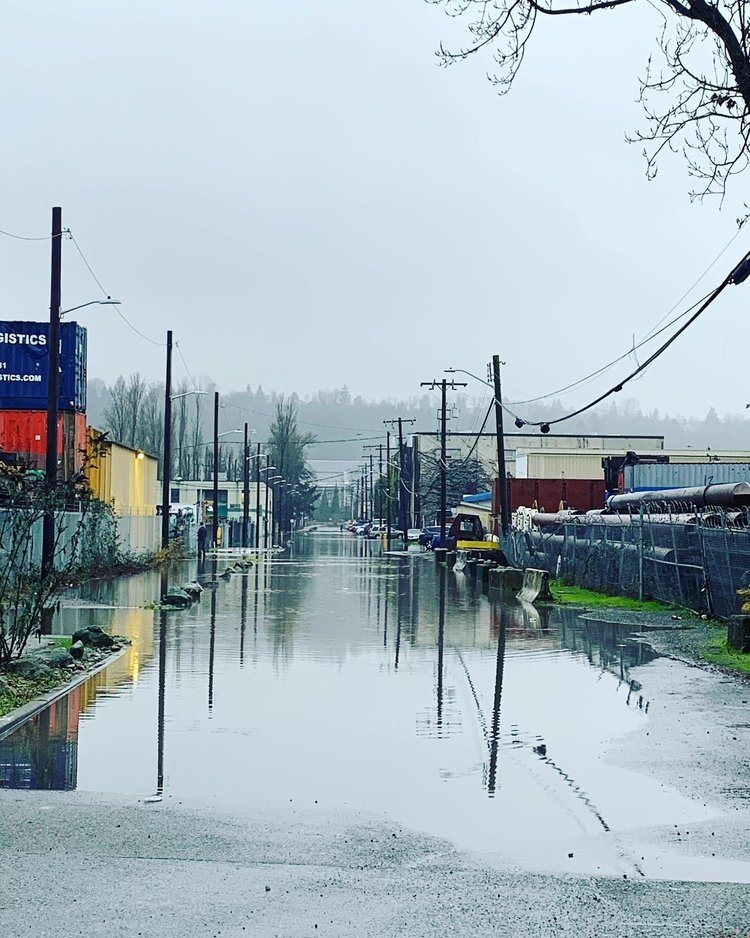
How does the Combined Sewer System in South Park affect community members? What is a Combined Sewer System (CSS)? A combined sewer system (CSS) collects rainwater runoff, sewage from homes, and industrial wastewater into one pipe. Under normal conditions, it moves all of the wastewater it collects to a sewage treatment plant for treatment, and then lets out the cleaned water to a water body. The amount of wastewater can sometimes be more than the CSS or treatment plant can hold (for example, during heavy rainfall events or snowmelt). When this occurs, untreated stormwater and wastewater flows directly to nearby streams, rivers, and other water bodies (in our case, into the Duwamish River). This is known as a Combined Sewer Overflow (CSO). There is a legal limit in the Duwamish Valley for how many CSOs may occur every year. How does this system affect community members living along the CSS? A CSO occurs when the CSS is overwhelmed by rainfall. Sometimes, this happens at the same time as an unusually high tide. As you probably know, the lower five miles of the Duwamish River is affected by the tides. When this happens, the pipes, which have been allowed to flow directly into the River, are blocked by the rising River, causing the combined sewage, rainwater, and River water to flow back the direction it came. Historically, this has meant flooding of contaminated water into homes that are served by the CSS. Who is affected? How often? What happens next? Through ongoing discussion with King County Wastewater Treatment Division (which is responsible for the CSS) and Seattle Public Utility (which is responsible for the individual systems which are served by the CSS), we believe there are about 18 houses in South Park that are chronically affected. Sometimes it happens once or twice a year, sometimes not at all, sometimes more—depending on the rainfall and the tides, as well as whatever plumbing solutions individual residents have developed. As DRCC has shifted our focus in recent years to climate justice and its intersection with racial justice and environmental justice, we have come to understand that this issue has not been addressed in an equitable way by the Responsible agencies. We are working with them to support their outreach efforts, their compensation policy, and action plans going forward to ensure that chronic flooding will be addressed and that individual homeowners and renters will no longer be at risk and/or expected to pay out of pocket for a working sewer system. We hope that within the first few months of 2022, the City and County will have flyers in English, Spanish and Khmer for our neighbors, explaining all the parts of the problem, and including phone numbers to call during flood events and for financial support after flood events. We expect a long-term solution to the CSS which protects neighbors AND our River, and we expect a strong mid-term solution which will include sewer shut-off valves for every resident, instructions on how to maintain and upkeep them, and guarantee personal engagement for each household.
|